 TYPICAL
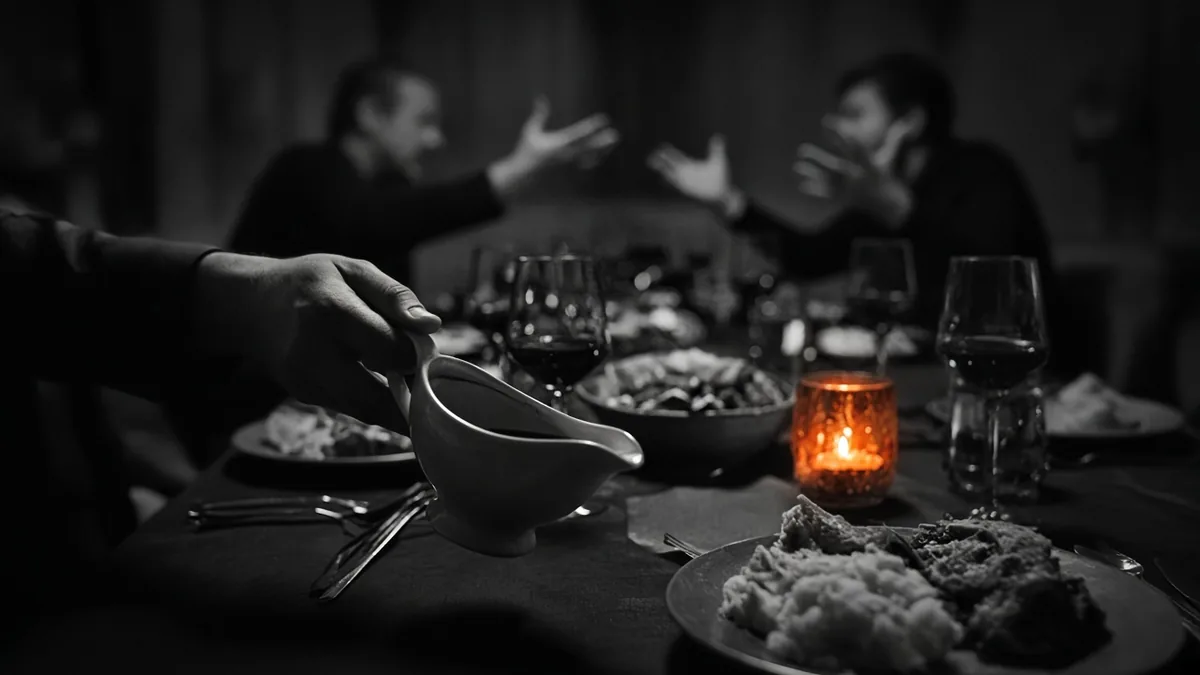
The Holiday Issue · His side here. Her side: How to avoid politics at Thanksgiving without becoming the family peacekeeper at Typical Female.Pick a side ↓
You will not win the argument at Thanksgiving. Nobody ever has. The only question is how much of the day you spend losing it.
Every family has the moment. The plates are half-cleared, somebody's on their second drink, and a relative says the thing. Everybody at the table knows what happens next. For years, at my family's table, what happened next was me.
I'd take the bait. I'd make a good argument. I'd lose the afternoon. Nobody's mind ever changed, including mine.
Not taking the bait isn't agreeing. It's choosing which day you want to have.
You're not the only one bracing
YouGov's 2025 survey found 31% of Americans expected politics to come up at Thanksgiving. In Savings.com’s Thanksgiving study, 58% said they planned to avoid it, 71% planned to avoid at least one topic, and 31% named family conflict as a source of holiday stress. The math says a lot of tables are full of people quietly hoping someone else changes the subject.
Here's a detail that surprised me. YouGov found most people expected to spend the holiday with people who voted like them: 45% of Harris voters and 44% of Trump voters said almost everyone at their table backed the same candidate. Yet 19% of Democrats and 9% of Republicans still expected an argument. The fights aren't only across party lines. Sometimes it's two people who agree on the vote and disagree on everything else.
Ban it or talk it out? The case for each
There's a serious argument for talking. Families that can't disagree out loud tend to disagree in silence, which is worse. If you only see your uncle once a year, maybe that's the one chance to understand why he thinks what he thinks. A ban can feel like pretending, and some subjects aren't abstract; they're about people at the table.
The case for a ban is simpler: the table is a terrible venue. People are tired, there's alcohol, there's an audience, and nobody came to be persuaded. My compromise: no debates at the table, real conversations one-on-one. If it matters, take a walk with him on Friday. Two people on a sidewalk can talk. Twelve people around a turkey can only perform.
Not taking the bait isn't agreeing
This was my mental block. If I let the comment pass, didn't that mean I agreed? No. It meant I chose which day I wanted to have. Your opinions survive a turkey dinner without being said out loud.
Exit lines that work
"I see it differently, but I'm not going to change your mind over pie. Who wants coffee?" "Let's do that one in December." "Ma, how did you make the stuffing this year?" Then get up. Physically changing the room is the most effective change of subject ever invented.
Three openers, and what to do with each
The bait. "Well, I guess we know what you think about all this." It's an invitation to a fight, addressed to you. You can decline it like any invitation: "You know me too well. Who's watching the game later?"
The monologue. A relative starts a speech and isn't looking for replies. Let it end. Don't add fuel. The second there's a pause, ask about something else.
The genuine question. Sometimes someone really wants to know what you think. Answer honestly and briefly, then say, "Let's do the long version over coffee this weekend." Then follow through.
When to step outside
If you feel your jaw lock, take the trash out. Walk the dog. Drive to get ice nobody needs. Twenty minutes outside is cheaper than a year of awkward calls.
Set it up in advance
If one relative always starts it, talk to the host before the day: can we agree to keep it off the table? If your partner is new to the family, agree on a signal. And if someone says something cruel about a person at the table, that's not politics anymore. You can say, calmly, "Not about her," and leave it there.
Her side, about why the peacekeeping usually falls to women and how to stop carrying it, is at Typical Female: How to avoid politics at Thanksgiving without becoming the family peacekeeper.
Frequently asked questions
How do you avoid talking politics at Thanksgiving?
Ask the host to set a simple no-politics norm in advance, have two or three exit lines ready and physically change the room: refill drinks, clear plates or step outside.
How many people talk about politics at Thanksgiving?
YouGov’s 2025 survey found 31% of Americans expected politics to come up, while in Savings.com's study 58% planned to avoid it and 71% planned to avoid at least one topic.
What do you say when someone brings up politics at dinner?
Try: "I see it differently, but I'm not going to change your mind over pie. Who wants coffee?" or "Let's do that one in December." Then redirect with a real question.
Is it okay to leave Thanksgiving dinner if it gets heated?
Yes. Step outside, take a walk or leave early if you need to. Twenty minutes away is better than a fight you'll be repairing for a year.
Your turn
Ban politics at the table, or talk it out? Pick a side below, and send us your best exit line.
Pick a side
Politics at the Thanksgiving table?
Tap one to get your share card. Your pick stays on this device; it is not a vote tally.
I took a side
The card links back to this piece. It is not a vote tally.
 Her side · Typical FemaleHow to avoid politics at Thanksgiving without becoming the family peacekeeperRead her take ↗
- Take the quiz: How typical is your Thanksgiving?
- Add your take to the Debate of the Month: Whose family gets Thanksgiving?
- Tell us your story. 18+, anonymous if you want, read by an editor.
More from the Holiday Issue



Sources
- YouGov, "Thanksgiving 2025: what Americans will cook, eat and debate at the table this year" (n=1,120). 31% of Americans said they were likely to discuss politics at Thanksgiving 2025.
- Savings.com, Thanksgiving trends study (n=2,502). 58% planned to avoid politics; 71% planned to avoid at least one topic; 31% cited family conflict as a stressor.