 TYPICAL
The Holiday Issue · His side here. Her side: We do both, and December nearly broke us at Typical Female.Pick a side ↓
We light one thing and then we decorate another. I used to call that love, and it is. It is also a month with two finales, and I am done pretending the calendar makes it easy.
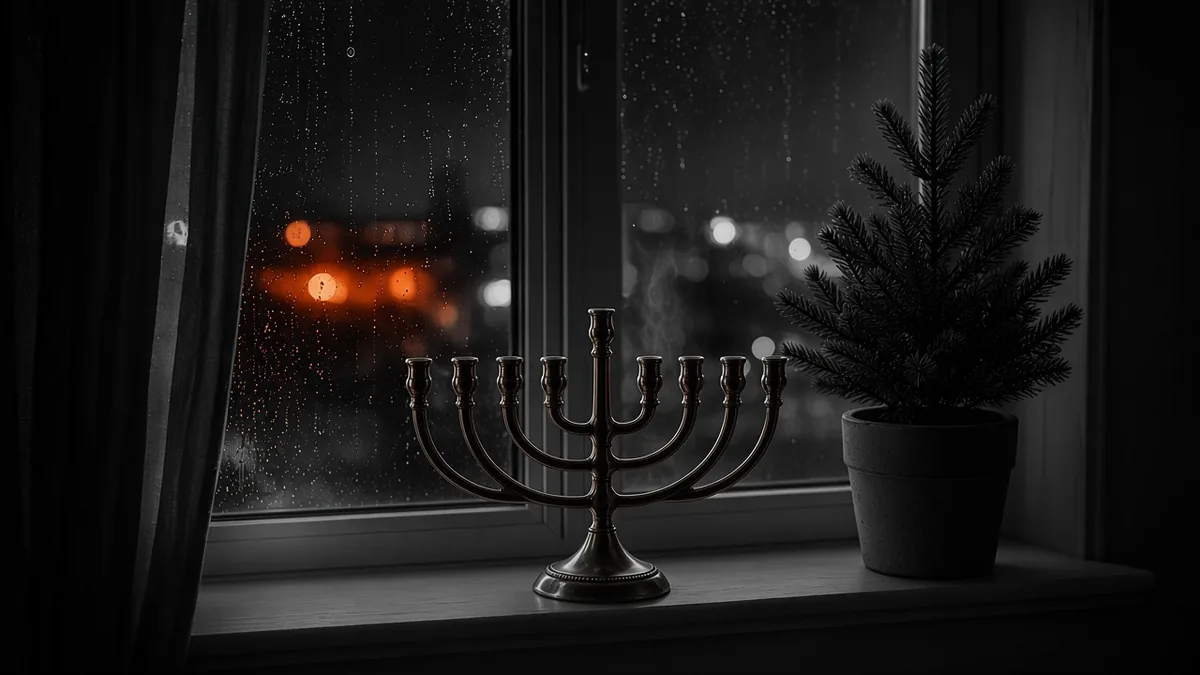
This year Hanukkah starts at sundown on December 4 and ends on December 12. Christmas is the 25th. People have told us we got a gift, a gap. What we got is two holidays that each want a full performance, with enough days in the middle for both families to decide whether they were honored or squeezed in.
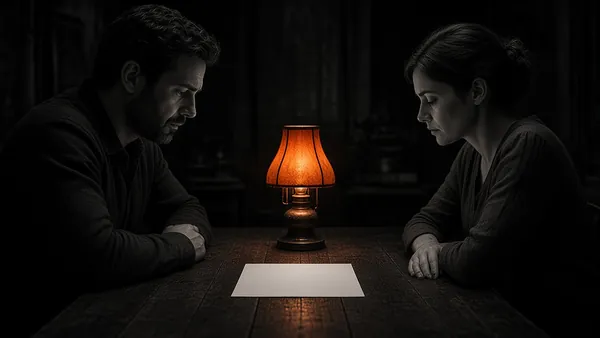
I am Jewish. She is not. I am not going to use this essay to speak for a people, or for every mixed house. I am going to speak for this arrangement, which we chose, and which I have sometimes treated as proof of my open-mindedness rather than as a workload.
What I got wrong
I thought the hard part would be theology, or someone's parent drawing a line. The hard part has been stamina, and the small politics of which tradition looks like the main event. A tree takes up more visual space than a menorah. That should not matter, and it does, because houses are read at a glance. I have been the person who asked, too sharply, how long the tree was staying up. I have also been the person who wanted eight nights to feel like eight nights, and then had very little left for her morning on the 25th.
Pew's 2013 survey of Jewish Americans found that 71 percent of Jews married to a non-Jewish spouse had a Christmas tree at home, compared with 32 percent of Jews overall. The finding is old, and I will leave it labeled as such. I mention it because the arrangement is common, and because the tree is often what outsiders see first. Pew also found, in 2016, that one in five U.S. adults had been raised in an interfaith home. A lot of people already know this month in their bones. I am late, maybe, to admitting that knowledge includes fatigue.
Her essay in this issue is about being the diplomat who also shops. I have been the person who needed the diplomat, which is not a role I am proud of. If my family wants to know why we are not there on a given night, that sentence should come from me, in my words, not from her after I have gone to bed.
The phone call I kept putting off
Last year I let her tell my parents the plan, because she is better on the phone, and because I told myself I was avoiding a fight. What I was avoiding was being the son. My mother heard the plan from an in-law, and the plan, even a reasonable one, arrived like a decision made about her rather than with her. I spent two days cleaning up a mess I had created by being quiet. This year I called. The call was short and slightly awkward. It was also my job.
If your family is the one with the tradition that looks smaller from the street, you will feel protective. I do. That protectiveness can turn into a sharpness at a tree, or at a schedule, that she should not have to absorb. Say the fear plainly, to her, before it comes out sideways in a doorway: I do not want my holiday to look like decoration in her month. Then make a plan that is visible enough to be honored, and small enough to be survived.
What we are cutting
Two of the eight nights are just us this year. No guests, no photograph, no attempt to make a weeknight into a production. Christmas morning in one house, not a tour. One meal for my parents, one meal for hers, and no project of making those meals similar as a gesture of fairness. Similarity is not respect. Showing up, and telling the truth about what we can do, is respect.
I will tell my family the plan. She will tell hers. If someone wants a fuller holiday than we can host, they can host it, and we will come when we can. We will not also be the event company for two traditions just to prove we are not choosing.
If you do both, the gap in 2026 will try to flatter you. Do not let it turn into two Christmases and no rest. You can honor a tradition without giving it your last patience. You can also say, to a person you love, that you are at capacity, and that capacity is not a slight against her childhood or yours.
I stopped pretending this is simple. That is the most respectful thing I have done for the month in a while.
Sources
- Pew Research Center, "Religious Beliefs and Practices of Jewish Americans" (Oct. 1, 2013)
- Pew Research Center, "One-in-Five U.S. Adults Were Raised in Interfaith Homes" (Oct. 26, 2016)
Pick a side
Two holidays in one December is:
Tap one to get your share card. Your pick stays on this device; it is not a vote tally.
I took a side
The card links back to this piece. It is not a vote tally.
 Her side · Typical FemaleWe do both, and December nearly broke usRead her take ↗
- Add your take to the Debate of the Month: Who makes the holidays happen, and who just shows up?
- Tell us your story. 18+, anonymous if you want, read by an editor.
- Read the issue from the beginning.
More from the Holiday Issue